
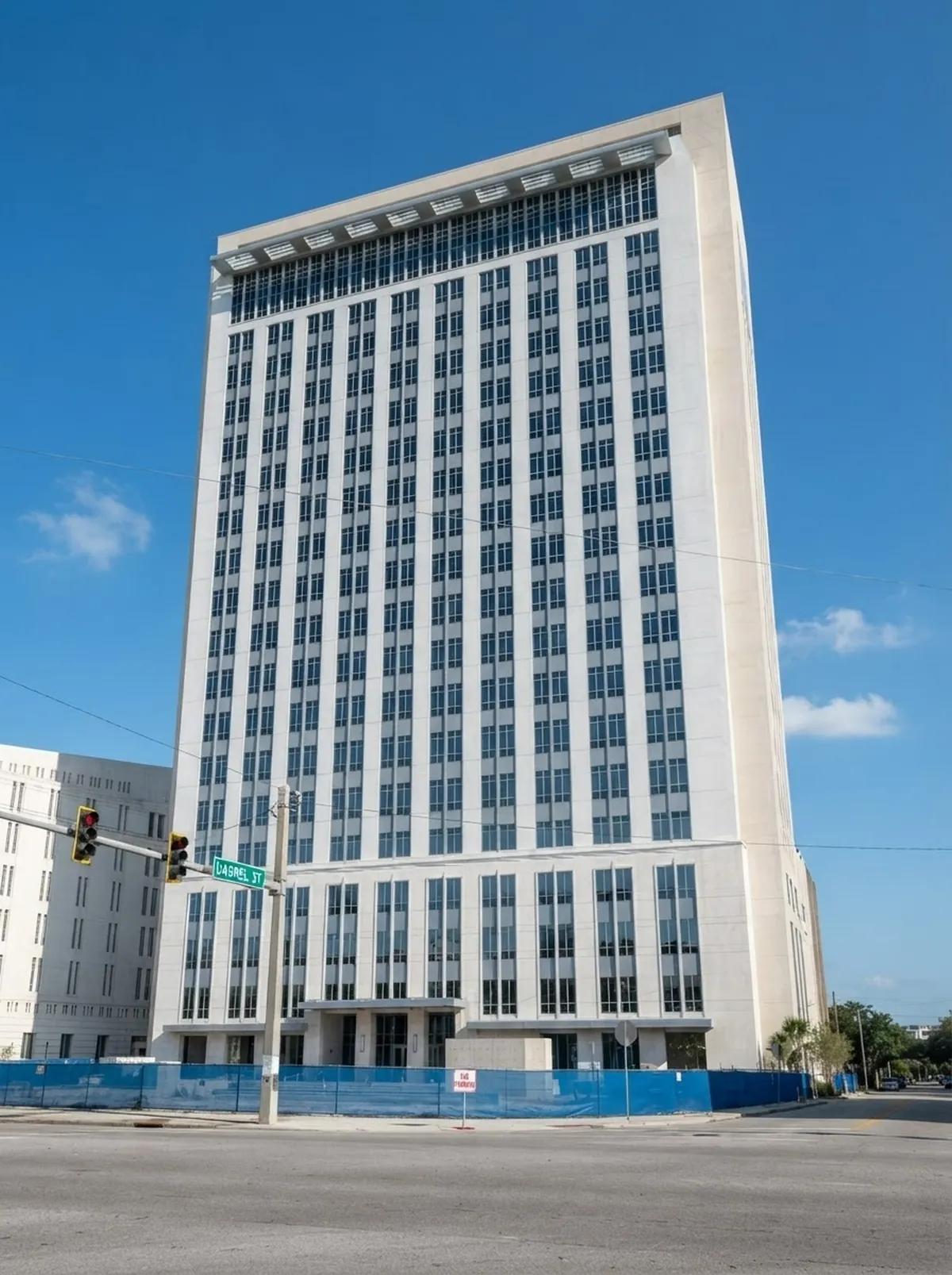
Court records in Broward County, Florida, are maintained by the Clerk of the Circuit and County Courts and can be accessed through online search tools, official court portals, and the clerk's office. BrowardCourt.us can help you find publicly available court record information for Broward County. Additional access points include the Broward County Clerk of Courts website, the Broward County Official Records Search portal, and various state and federal government resources described below.
Broward Court System Overview
Broward County is part of Florida's Seventeenth Judicial Circuit, which serves Broward County exclusively. The circuit court is the trial court of general jurisdiction, handling all matters not assigned to the county court. The county court operates as a court of limited jurisdiction within the same courthouse complex. Both courts are served by a single Clerk of the Circuit and County Courts. The main courthouse is located in downtown Fort Lauderdale.
Broward County Courthouse
Courts Serving Broward
Several courts at the state and federal level serve Broward County residents:
Seventeenth Judicial Circuit Court (Circuit Court)
Broward County Court
U.S. District Court – Southern District of Florida (Fort Lauderdale Division)
U.S. Bankruptcy Court – Southern District of Florida (Fort Lauderdale Division)
Broward County does not operate separate municipal courts. All criminal and civil matters are handled through the circuit and county court system.
What Types of Cases Broward Courts Hear
Courts in Broward County handle a wide range of case types across the circuit and county court levels:
- Felonies and misdemeanors
- Criminal traffic and civil traffic infractions
- Civil litigation (all dollar amounts)
- Small claims
- Family law — divorce (dissolution of marriage), custody, child support, paternity, domestic violence injunctions
- Probate — decedent estates, guardianship, trust disputes
- Juvenile — delinquency and dependency proceedings
- Adoption and termination of parental rights
The sections below explain which court handles each category.
District Court Cases in Broward
The Seventeenth Judicial Circuit Court (the circuit court) is Broward's court of general jurisdiction. It hears:
- All felony criminal cases
- Civil cases where the amount in controversy exceeds $50,000
- Family law matters including dissolution of marriage, custody, and domestic violence injunctions
- Probate, guardianship, and trust proceedings
- Juvenile delinquency and dependency cases
- Appeals from county court decisions
Felony cases typically begin with an arrest or information filed by the State Attorney's Office. A circuit judge is assigned, and the case proceeds through arraignment, pretrial motions, and trial or plea. Civil cases are initiated by filing a complaint with the clerk and are assigned to a division based on case type.
Magistrate Court Cases in Broward
The Broward County Court functions as the court of limited jurisdiction, handling:
- Misdemeanors and criminal traffic offenses
- Civil cases where the amount in controversy is $50,000 or less
- Small claims cases up to $8,000
- Non-criminal traffic infractions
- County ordinance violations
- DUI arraignments and related hearings
Under Florida law, the county court's civil jurisdictional limit is $50,000. Small claims, a simplified procedure within the county court, covers disputes up to $8,000. Because of Broward's large caseload, county court judges are often assigned to specific divisions such as traffic, criminal misdemeanor, or civil. Cases are filed through the Clerk of Courts and assigned to a judge based on division and case type.
Family Law, Probate, and Juvenile Matters in Broward
Family Law: Divorce (dissolution of marriage), child custody, child support, paternity, civil protection orders, and termination of parental rights are handled by the circuit court's Family Division. The Clerk's Family Division manages filings and can provide information on required forms. Official Florida Supreme Court–approved family law forms are available online, including petition for dissolution of marriage forms. Divorce certificates can also be requested through the Florida Department of Health.
Probate: Decedent estates, guardianships, and trust matters are heard in the circuit court's Probate Division. Filings are processed through the clerk's office, and most probate records are publicly accessible unless sealed by court order.
Juvenile: Juvenile delinquency and dependency (child protective) cases are handled by the circuit court. Juvenile court records are confidential under Florida law and are not available through public search tools. Contact the clerk's office directly for information about accessing juvenile records if you are an authorized party.
How Cases Move Through the Broward Court System
- Filing / Initiation: Criminal cases begin with an arrest, information, or indictment. Civil cases start when a plaintiff files a complaint or petition with the clerk. Family and probate cases are initiated by petition.
- Case Assignment: The clerk assigns a case number and routes the case to the appropriate division and judge.
- Initial Hearing: In criminal cases, this is the arraignment where the defendant enters a plea. In civil cases, a case management or scheduling conference is set.
- Pre-Trial Phase: Both sides exchange evidence (discovery), file motions, and may attempt to negotiate a resolution — plea agreements in criminal cases or settlement in civil cases.
- Trial or Resolution: Cases that are not resolved go to trial before a judge or jury. Many cases conclude through plea, settlement, or default judgment before reaching trial.
- Post-Judgment: In criminal cases, sentencing follows a guilty verdict or plea. In civil cases, enforcement of the judgment or appeal may follow. Appeals from county court go to the circuit court; appeals from circuit court go to the Fourth District Court of Appeal.
Court Administration, Local Rules, and Public Access in Broward
The Seventeenth Judicial Circuit is administered by the Chief Judge, who sets local administrative orders and oversees court operations. The Trial Court Administrator's office handles day-to-day management of court resources and scheduling.
Local Rules: Administrative orders and local rules for the Seventeenth Judicial Circuit are published through the Florida Judicial Branch website and the circuit's own administrative office. These rules govern filing procedures, courtroom conduct, and case management practices specific to Broward.
Public Access: Under the Florida Public Records Act (Chapter 119, Florida Statutes), court records are generally open to the public. However, certain records are confidential or exempt by statute — including juvenile records, some mental health records, sealed or expunged cases, and specific personal identifiers. Florida Rule of Judicial Administration 2.420 governs the sealing and confidentiality of court records.
Attending Hearings: Most hearings in Broward are open to the public and can be attended in person at the courthouse. Some proceedings may be conducted remotely via audio or video technology. Check the court calendar or contact the clerk's office for details on a specific hearing.
Trial Court Administrator's Office
Court Records and Related Court Resources in Broward
- Court Case Search: The Broward County Clerk's public case search lets you look up circuit and county court cases by name, case number, or case type, including criminal, civil, family, and traffic cases.
- Records Requests: If you need certified copies or older paper records, the clerk's records request page explains options for purchasing documents. Electronic certified documents are also available for certain filings.
- Official Records Search: Recorded documents such as deeds, mortgages, liens, and judgments can be searched through the Broward County Official Records portal or the county's public records search tool.
- Property Records: The Broward County Property Appraiser provides property assessment data, ownership details, and GIS mapping tools.
- Criminal History Records: Statewide criminal background checks can be obtained through FDLE's Criminal History Records page.
- Seal and Expunge: Information on sealing or expunging a criminal record in Florida is available through the FDLE Seal and Expunge Process page.
- Inmate Search: The Florida Department of Corrections offers a statewide inmate locator. For county jail inmates, the Florida Department of State's county jail directory links to Broward's jail search tool.
- Sex Offender Registry: Search for registered sexual offenders and predators through the FDLE Sexual Offenders and Predators database.
- Wanted Persons: Active Florida warrants can be searched through the FDLE Wanted Persons search.
- Federal Court Records: Federal case filings for the Southern District of Florida are accessible through PACER.
- Law Library: The Broward County Law Library offers legal research resources and self-help materials for people representing themselves in court.